
Caricature Robot at Trade Shows: How to Capture Leads and Measure Results
You spend three days at a trade show, hand out business cards and come home with a box of contacts nobody remembers. A robot that draws each visitor's caricature in under a minute changes that: it builds a queue, starts conversations and collects each person's email in exchange for the drawing. Here's how to set it up, what to measure and how many robots you need.
In Short
An AI caricature robot captures leads when delivery of the digital drawing requires the visitor's email, the drawing carries your brand's logo and the queue becomes a sales conversation. For a one-day trade show, one or two robots can realistically serve several hundred people. The software behind it is PictiaX, with a licence and PICTICOINS.
Why a Caricature Robot Captures Better Than Other Activations
A prize draw or a leaflet asks visitors for something without giving them anything. A robot that draws gives them something unique in return, and that changes their willingness.
It Draws People in Through Curiosity
The arm moving as it draws is visible from the aisle and gathers a crowd. Whoever stops to watch is who signs up next, and that queue is a line of potential clients your team can approach naturally. It's the same logic we explain in photo booth for trade shows and stands.
It Gives a Reason to Stay
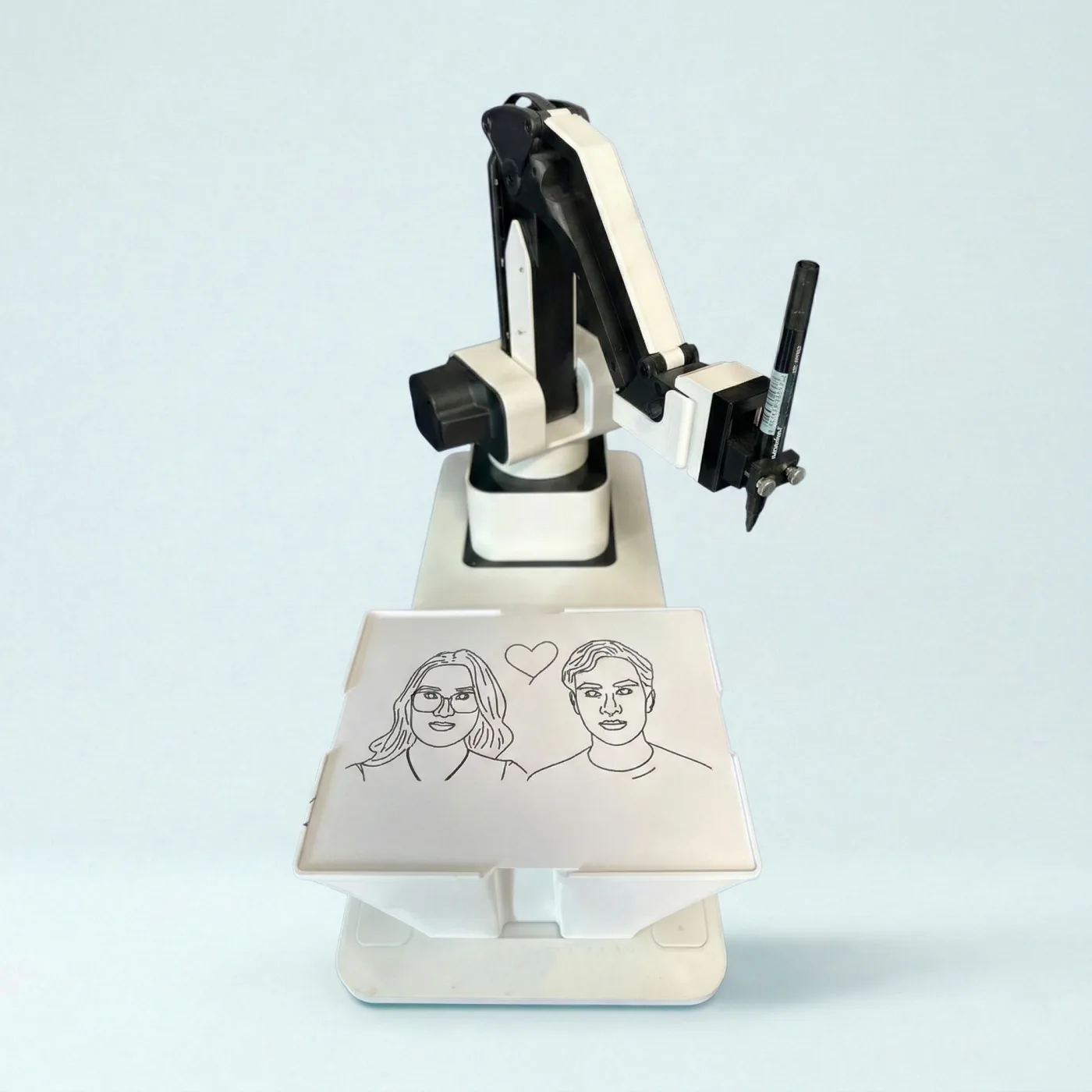
A drawing takes 30 to 40 seconds with the CaricaBot. That's just the right window to ask visitors what they do, what they came looking for and whether they'd like you to send them information.
People Share It
The caricature is personal and fun, so it gets posted on social media with your brand inside. Every post carries your logo to the visitor's network, many of them from the same industry.
It Works with Any Visitor Profile
Executives, students and families all like the drawing, which lets you approach profiles who would never stop for a leaflet. It also needs no explanation: visitors see the result on someone else's paper and want their own. That mechanic is much easier to sustain over eight hours than a product demo, and your team spends its energy on conversation instead of repeating the same pitch.
How to Capture the Contact with Digital Delivery
The paper drawing stays in the visitor's hand. Digital delivery is what gets you the lead. The setup that works has three steps.
Step 1: the drawing. The visitor stands in front of the camera, the robot draws them and hands over the printed original with your brand's logo on the frame.
Step 2: the digital version. If they want the digital copy to share, they enter their email on a screen or scan a QR code. In return they receive the high-resolution image.
Step 3: consent. Include a clear checkbox to receive marketing communications and a link to the privacy policy. Without consent there's no usable lead, and complying with GDPR is part of the job.
Add a qualifying question on the same screen, such as industry or main interest. With two fields and a button, the form takes five seconds to fill in and your sales team follows up with context. To see how the full flow is managed, see the guide to photo booth for activations.
Trade Show Metrics: What to Measure
Without numbers you don't know if it worked. These are the figures worth recording.
- Drawings delivered: total participations over the days of the show.
- Emails captured: contacts with valid consent. Divide by drawings to get the capture rate.
- Qualified leads: contacts who match your ideal client according to the screen question.
- Meetings or calls generated: the conversations that came out of the queue.
- Cost per lead: total cost of the activation divided by the contacts captured.
- Social media shares: posts with your brand, measured by hashtag or mentions.
Compare the cost per lead with that of your usual campaigns. To work out how long the robot takes to pay off, see how much a caricature robot costs.
- Drawings delivered
- Emails captured with consent
- Qualified leads
- Meetings generated
- Cost per lead
- Social media shares
How Many Robots to Put on Your Stand
The answer depends on visitor flow and how much queue you're willing to tolerate. At 30 to 40 seconds per drawing, one robot keeps a steady pace, but at peak hours the queue grows.
One robot is enough for a small stand or a show with moderate traffic. It keeps the wow factor without overwhelming your team.
Two robots are the usual choice when you expect heavy footfall. You double capacity, avoid long queues and one keeps running if the other needs paper or an adjustment.
More than two makes sense at mass events or multi-day brand activations. The CaricaBot supports up to 8 robots in parallel.
Start with one or two and check the queue on the first morning. If people leave without waiting, add capacity. If you see gaps, keep just one.
Also prepare everything around the robot: enough paper for the whole day, a clear sign with the offer ("Your Free Caricature in 40 Seconds"), one person managing the queue and another collecting data. A fast, well-run queue is what separates an activation that captures contacts from one that only entertains.
PictiaX: Licence and PICTICOINS
The CaricaBot runs PictiaX: they're the same system, the robot and the AI software that draws. That's why the cost model has two parts.
The licence gives access to the software per unit. PICTICOINS are the usage currency: each portrait drawn uses one. They're topped up in packs, so your spending only grows when you bill events or capture more contacts.
The Launch Pack published on pictiax.com costs 2.490 $ and includes two robots, a one-year licence and 500 PICTICOINS. The details of the model are on the robot sketch software page. If you want the complete robot, see the CaricaBot page, which starts at 4.990 € + VAT.
Frequently Asked Questions
How Does a Caricature Robot Capture Leads at a Trade Show?
By delivering the digital version of the drawing in exchange for the visitor's email, with clear consent. A qualifying question on the same screen lets you segment contacts after the show.
How Long Does a Caricature Robot Take to Draw?
The CaricaBot draws an AI caricature in about 30-40 seconds, enough time to hold a short conversation with the visitor while they wait.
How Many Robots Do I Need for a Trade Show?
One for a small stand, two for high traffic and more only at mass events. Start with one or two and adjust based on the queue on the first morning.
What Is PictiaX and How Does It Relate to the CaricaBot?
PictiaX is the AI software that draws the caricatures. The CaricaBot runs PictiaX: they're the same system, the robot and the software.
How Do the Licence and PICTICOINS Work?
The licence gives access to the software per unit and each portrait uses one PICTICOIN. They're topped up in packs, so you pay for actual usage.
How Do I Measure the Return of a Robot at a Trade Show?
Record drawings delivered, emails captured, qualified leads and meetings generated, and divide the cost of the activation by the contacts. Compare it with your usual cost per lead.
Is It Legal to Ask for an Email in Exchange for the Drawing?
Yes, as long as you inform people clearly, ask for express consent for marketing communications and link to your privacy policy. Without consent, the contact can't be used for marketing.
Related Guides
Keep reading


Need Help Choosing?
We're direct manufacturers. We'll advise you with no obligation for your case.